Common Causes of Window Screen Damage
Window screens wear over time. The mesh and frame are impacted by weather, temperature changes, pets, children and general use. If you know what causes the damage, you can try to prevent it or repair it when possible. You’ll also know when it makes more sense to go for a complete replacement instead.
Below are the main causes of screen damage and a few simple ways you can manage them.
Weather and Storms
On the exposed sides of a house, weather is usually the first thing to age a screen. In strong winds, the mesh is hit by dust, grit, small stones, leaves and twigs. Each impact may be tiny, but the fiber gradually thins out. After a few heavy storms, the “busy” areas of the mesh become the places where pinholes appear or where you can see a slightly see-through patch compared to the rest of the screen.
Even light hail can bruise the mesh. One or two dents usually don’t make a difference, but a panel that has taken repeated hits in the same season is more likely to tear later in those weakened spots. The frame can also be impacted and may eventually start rattling in the track or sit looser than it used to.
You cannot change the weather, but you can make it less destructive. Keep bushes and tree branches away from the glass and consider sturdier screen material and storm protection on very exposed sides of the house. If a storm damages the mesh but the frame is still straight, that panel can usually be rescreened rather than completely replaced.
Sun and UV Exposure
Direct sun is another slow, steady cause of screen damage. Ultraviolet (UV) rays dry out the mesh, especially darker or lower-grade fabrics. When a screen is new, the mesh flexes easily. After years in direct sun, it begins to fade, stiffen and eventually become brittle. This is easiest to see on south and west-facing windows.
At that stage, very little force is needed to cause a tear. On very hot glass, cheaper mesh can soften and then cool into a slightly sagged or warped shape, so it never sits truly flat again.
You can slow this kind of window screen damage by matching the material to the level of sun exposure. Standard insect screens are fine in the shade, but solar or UV-resistant screens hold up much better and can also cut heat and glare.
Cold and Fast Temperature Changes
Cold weather stresses screens in a different way. When temperatures drop, the mesh becomes less flexible. Once it stiffens, any movement is more likely to crack the fiber than bend it. A knock that would not matter in mild weather can split the mesh during a hard frost.
Winter also brings temperature swings. On a warm day, the sun may warm the screen for a few hours, then disappear and cool the material again. That constant expansion and contraction work on both the mesh and the frame. Over time, the spline that holds the mesh in place can loosen, especially in the corners and tiny fractures develop in the fiber nearby.
You might notice fine, crazed lines in the mesh, corners where the material has crept back from the frame, leaving a gap or a screen that starts to sag shortly after a cold spell, even though nothing obvious has hit it. A sensible habit is to walk around the outside of your house in early spring and inspect each screen closely. Panels that already look gray, crackled or pulled back in the corners are likely to cause trouble when the next winter arrives, so re-screening them ahead of time often saves a headache.

Poor Fit and Stretched Mesh
Not every window opening is perfectly square. If you take a “close-enough” ready-made screen and force it into an opening that does not really match, the mesh usually pays the price.
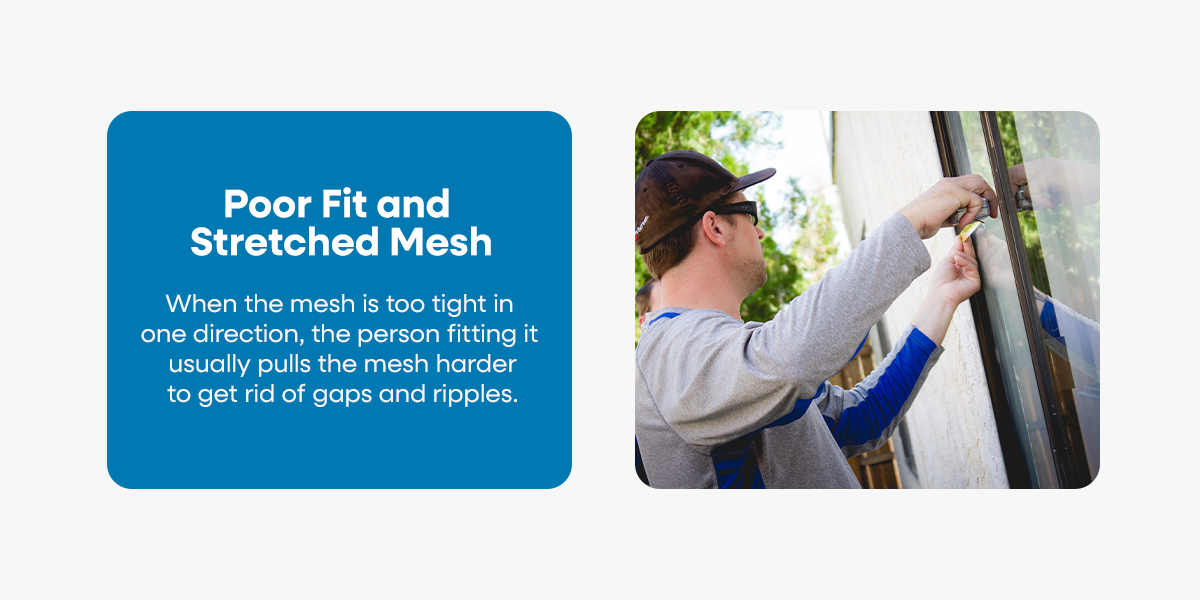
When the mesh is too tight in one direction, the person fitting it usually pulls the mesh harder to get rid of gaps and ripples. That tension may make the screen look flat and neat on day one, but all that strain is sitting in the fabric and the effects will soon show.
The long-term answer is a screen made to the actual measurements of the window. Custom screens follow the real width, height and angles of the opening so the frame can sit square and the mesh can be tensioned evenly. That stops the same screen from becoming a repeat problem every season.
Bent or Damaged Frames
Sometimes the torn mesh is just the visible symptom. The real problem is the frame behind it.
Frames are easy to bend without noticing. A ball hits the window. A ladder leans against the frame for painting. Someone pulls on one corner to get a screen out for cleaning and twists the rail slightly. Each event is small, but they add up.
Once the frame is out of line, the mesh has to twist to follow that shape. That is when you see sagging in one area and excessive tension in another, even when the fabric itself is fairly new. A warped frame may no longer sit properly in the track, either, so the panel rattles in the wind or works loose and falls out.
It’s worth checking the frame first before deciding what to do with a damaged screen. To do this, just press gently along the edge. If it rocks or you can see light where it no longer meets the window properly, you’ll know that the frame is at fault. Small bends can sometimes be straightened well enough to keep going, but heavily twisted, cracked or corroded frames are usually better replaced.
Pets, Children and Everyday Use
A lot of damage comes from inside the house, simply because screens sit at exactly the height where pets and children interact with them.
Cats may like to stand up or claw on the mesh when watching birds and people outside. Dogs push noses and paws against lower sections, especially at doors and large windows. Young children test screens with their fingers, pull loose strands or push to see how much the mesh moves. None of this is unusual, but standard insect screens are not designed for that kind of repeated pressure in the same spots. You can’t completely stop these habits, so it makes sense to adapt the screens instead.
Pet-resistant mesh is thicker and more robust than standard insect screen and is a good choice for rooms where animals spend a lot of time. A guard panel along the lower section of a screen door will also help keep claws and paws away from the fabric.
Insects and Small Pests
Not all screen damage comes from weather or people. Some of it is caused by the very things you are trying to keep out.
Certain insects will chew straight through the mesh. Grasshoppers, wasps or other biting insects are a good example — they sit on the screen and nibble until they make a neat little hole. Small animals like mice and other rodents can play a role, too. In this case, you’ll likely see tidy, local damage rather than a long rip.
You see this more often on windows close to shrubs, long grass, sheds or undeveloped ground, simply because this is where insects and small animals spend more time. Cutting plants back from the wall helps a lot because it removes cover and makes any damage easier to spot early. On those “busy” sides of the house, using a stronger mesh is a sensible upgrade.
Prevent Window Screen Damage With Better Screens From Screenmobile
Many screen problems start with the wrong product. Standard, off-the-shelf screens often use lighter mesh and frames that do not really match your window openings.
Screenmobile builds custom window screens on-site so they fit your actual windows. We can also help you choose the right mesh for your area, including standard insect screen where it is enough, pet-resistant mesh for doors and busy family rooms and solar fabrics for hot, sun-exposed windows.
If you are dealing with torn mesh, loose frames or screens that never quite fit, we can measure, build and install new custom screens at your home. Contact us to schedule a visit or request a quote for properly fitted, high-quality screens.